Growers need a clearer view of demand.
Our starting hypothesis: planned orders and agreed purchasing windows can make harvests and payouts more predictable.
From the people who grow it.
To the people who gather around it.
We’re developing a farm-to-home supply network for Helsinki, Finland, with a planned Claude-assisted operations workflow that connects household demand, growers, and delivery.
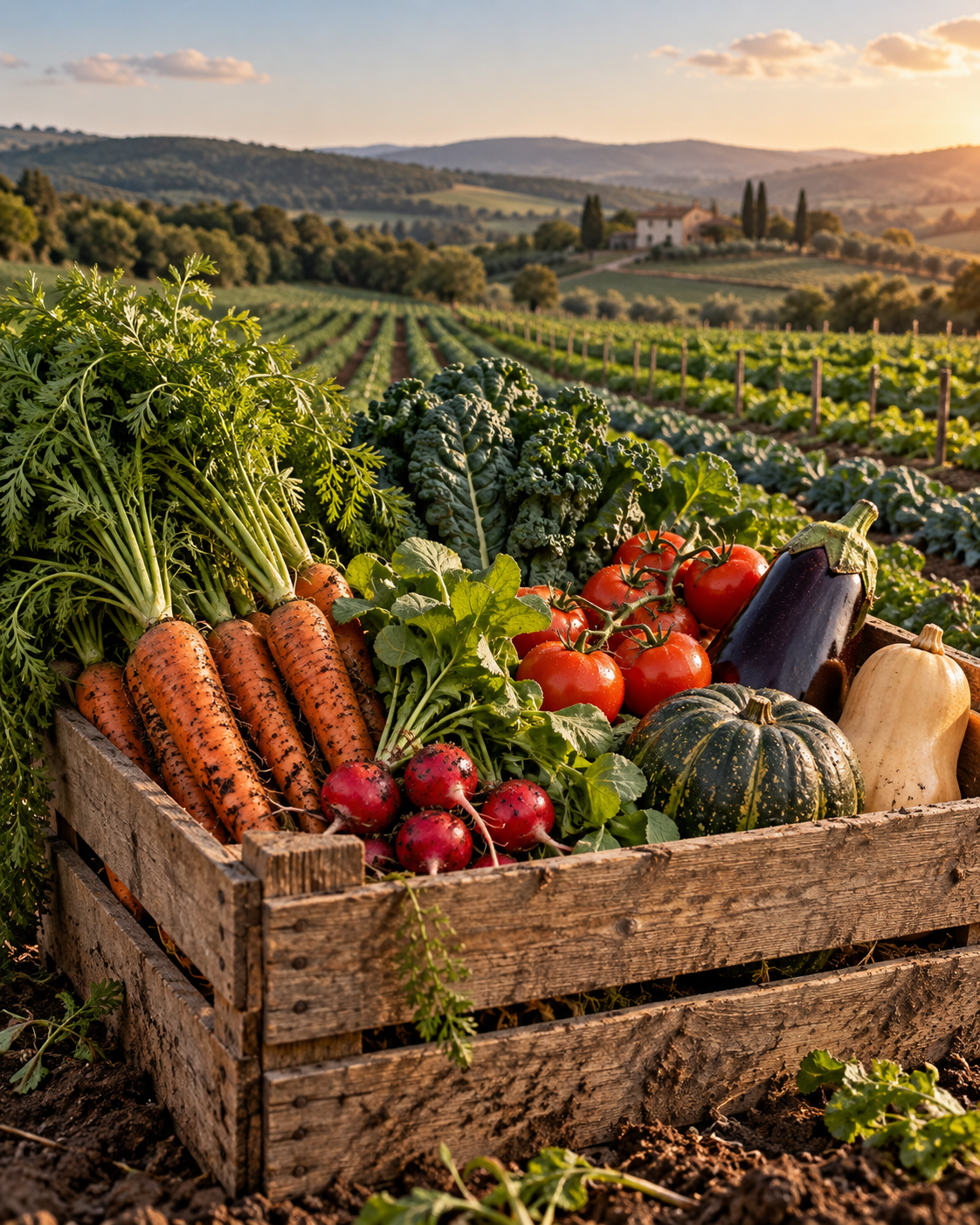
The opportunity is to coordinate the whole journey—not just the last mile.
Our starting hypothesis: planned orders and agreed purchasing windows can make harvests and payouts more predictable.
A seasonal basket with a known origin, transparent pricing, and a dependable delivery day makes buying from farms easier.
Collection, quality checks, packing, and delivery must share an order plan. The pilot will test whether this reduces waste and cost.
One coordinated loop, from the next order to the next growing cycle. Select a step to explore the proposed operating model.
Households reserve a weekly box before an order cutoff. Flexible subscriptions and clear substitution preferences turn scattered purchases into a shared demand forecast.
Start with seasonal produce. Earn repeat trust. Build the operational foundation to connect more of the food supply chain.
Seasonal boxes, farm-origin information, flexible skips, and a reliable delivery window.
Agreed purchase plans, quality standards, shared collection, and transparent payout terms.
Order visibility, batch traceability, consolidated routes, and a measured approach to surplus.
Our planned operations assistant will turn grower notes and household requests into structured drafts, then suggest substitutions for an operator to review.
Use Claude to draft order lines and structure grower availability. Flag missing quantities and conflicting instructions.
Ground alternatives in verified stock and customer preferences. Keep inventory, pricing, and totals in deterministic systems.
Require human review before a substitution, purchase, or customer message. Route uncertainty to the team.
Planned evaluation: extraction accuracy, unsupported suggestions, review time, latency, and API cost per processed request.
One box for Friday, with 1 kg of carrots. Parsnips are okay if carrots are unavailable.
Carrots: unavailable · Parsnips: 8 kg available
This browser-only walkthrough uses predefined examples. It does not call Claude, process real orders, reserve stock, or save your review.
Interactive concept website and illustrative operating model.
Order intake, a Claude API prototype, verified inventory connections, and the operator review queue.
Minimize personal data sent to the model. Keep payment details out of prompts and define access and retention before a live pilot.
A repeat-purchase model where better route density can improve the economics of every basket.
Buy from partner farms at agreed prices and sell curated boxes. Revenue is basket sales; margin must cover fulfillment.
Flexible weekly subscriptions support planning and retention. Subscription frequency does not create separate revenue.
Test add-ons and scheduled restaurant orders only after core service quality and contribution economics work.
Explore the assumption: a €120.00 delivery route divided by its completed orders. All inputs are illustrative planning assumptions, not Finnish supplier quotes, performance, or forecasts. Applicable taxes require local validation. Capacity, route time, acquisition costs, and retention still need validation.
Our proposed entry point: busy households in a compact delivery zone, served by a curated group of nearby produce growers.
Proposed pilot duration
Target partner farms
Target paying households
Focused launch area
Planning targets only. No operating traction is claimed. Planned launch market: Helsinki, Finland. A single pilot zone will be selected after local validation.
Interview households and growers. Confirm supply, packaging, food-handling requirements, and delivery partners.
Gate: verified supply and paid pilot demand.Operate weekly order cycles. Track repeat orders, quality issues, spoilage, farmer payouts, and full delivery costs.
Gate: reliable service and improving contribution.Add an adjacent zone only when retention and route economics justify it. Grow supply alongside confirmed demand.
Gate: positive contribution and viable acquisition payback.We’re developing a repeatable local supply network, with the ambition to turn reliable food delivery into enduring farmer and household relationships.
The first capital should fund proof: a working pilot, disciplined operations, and transparent unit economics.
Download the investor brief CONCEPT STAGE · SEEKING ALIGNED PARTNERSFunding amount and terms to be determined
after local operating-cost validation.
Our Helsinki launch scenario combines public local context with a focused operating hypothesis. The next step is customer discovery and supplier validation.
MyHelsinki describes produce stalls at Hakaniemi Market Hall and fresh produce at summer market stalls. This gives us a local shopping context to study; it does not establish demand for our service.
Source: MyHelsinki market halls ↗The city's district information lists Kallio, Vallila, and Pasila. Our proposed discovery shortlist uses these areas to compare customer interest and practical delivery coverage.
Source: City of Helsinki districts ↗The City of Helsinki provides maps and geospatial data through its Map Service. We propose using public mapping alongside delivery quotes to assess one pilot zone.
Source: Helsinki Map Service ↗Test a seasonal produce box for households in one selected Helsinki zone. Kallio, Vallila, and Pasila are candidates for discovery, not active delivery areas. Grower selection, prices, and delivery capacity still need validation.
Proposed roles for a small founding team. These describe the work required, not named employees or confirmed hires.
Customer discovery, grower relationships, budget, and commercial decisions.
Batch checks, packing standards, substitutions, and delivery coordination.
Order intake, the Claude prototype, evaluations, and the human review queue.
Delivery communication, issue resolution, and repeat-order feedback.
Public context checked on October 9, 2026. Pilot choices and operating days are illustrative proposals, not verified traction or announced service availability. The referenced city services and market venues are not presented as partners or endorsers.
Farm to House is a planned farm-to-home product of Viikki Urban Farmers Oy, a Finnish limited company registered in 2025.
Our registered business activity is in produce cultivation. The Farm to House vision extends into coordinated preorders, grower availability, packing, and household delivery, supported by an operations assistant with human approval.
The product is at concept and prototype-planning stage. Pilot targets and basket economics on this page are planning assumptions; product revenue, customers, funding, and live Claude integration are not claimed.
Company facts checked on October 9, 2026. Registry data: Finnish Patent and Registration Office (PRH) / YTJ, CC BY 4.0. Descriptions translated and shortened for readability.
The mailing address is the public company-record address. It is not an announced collection point or retail location.
A company-domain contact channel will be published before pilot recruitment opens.
Board roles as listed by Proff on October 9, 2026. Farm to House pilot responsibilities will be agreed separately.
Not yet. We plan to use Claude for order extraction and substitution suggestions, with human review before action. The workflow preview uses predefined sample data. No Anthropic partnership, startup-program acceptance, or endorsement is claimed.
The proposed advantage is the operating loop: committed demand informs purchasing, collection, packing, and consolidated delivery. Relationships and operating data may become defensible over time; neither is an established moat at concept stage.
The pilot design includes supplier standards, batch records, intake checks, suitable storage and transport, and clear rejection and refund procedures. Preorders are intended to limit excess inventory. Surplus pathways must be arranged locally and measured.
Willingness to pay, repeat purchase behavior, grower reliability, food quality, route capacity, and positive contribution after variable costs. Acquisition payback and working-capital requirements must also support expansion.
Farm to House is a planned product of Viikki Urban Farmers Oy, registered in Finland on 11 July 2025. The product remains at concept and prototype-planning stage. Pilot targets, economics, and capital allocation describe a proposed service; product customers, revenue, and investment commitments are not represented as secured.
The launch geography, founder team, local supply and demand interviews, costed pilot budget, food-handling plan, working capital, and funding milestones. Download the brief for the full discussion outline. See the company section for the current contact status.